
How to Beat Digital Distractions and Stay Focused While Studying
Struggling with phone addiction while studying? Learn practical ways to manage digital distractions, improve focus, and boost productivity using smart techniques like Pomodoro, focus mode, and study routines—perfect for CUET, CLAT, CA Foundation, and board exam students.
12/15/20253 min read
How to Manage Digital Distractions While Studying
In today’s digital world, students are surrounded by distractions—social media notifications, constant phone buzzing, messages, YouTube videos, and endless scrolling. While technology has made studying easier with online notes, lectures, and resources, it has also become one of the biggest hurdles to staying focused. For students preparing for entrance exams like CUET, CLAT, CA Foundation, or board exams, learning how to manage digital distractions is essential for productivity and better performance.
This blog explains why digital distractions happen, their impact on your concentration, and the best strategies to stay focused while studying.
Why Digital Distractions Affect Students
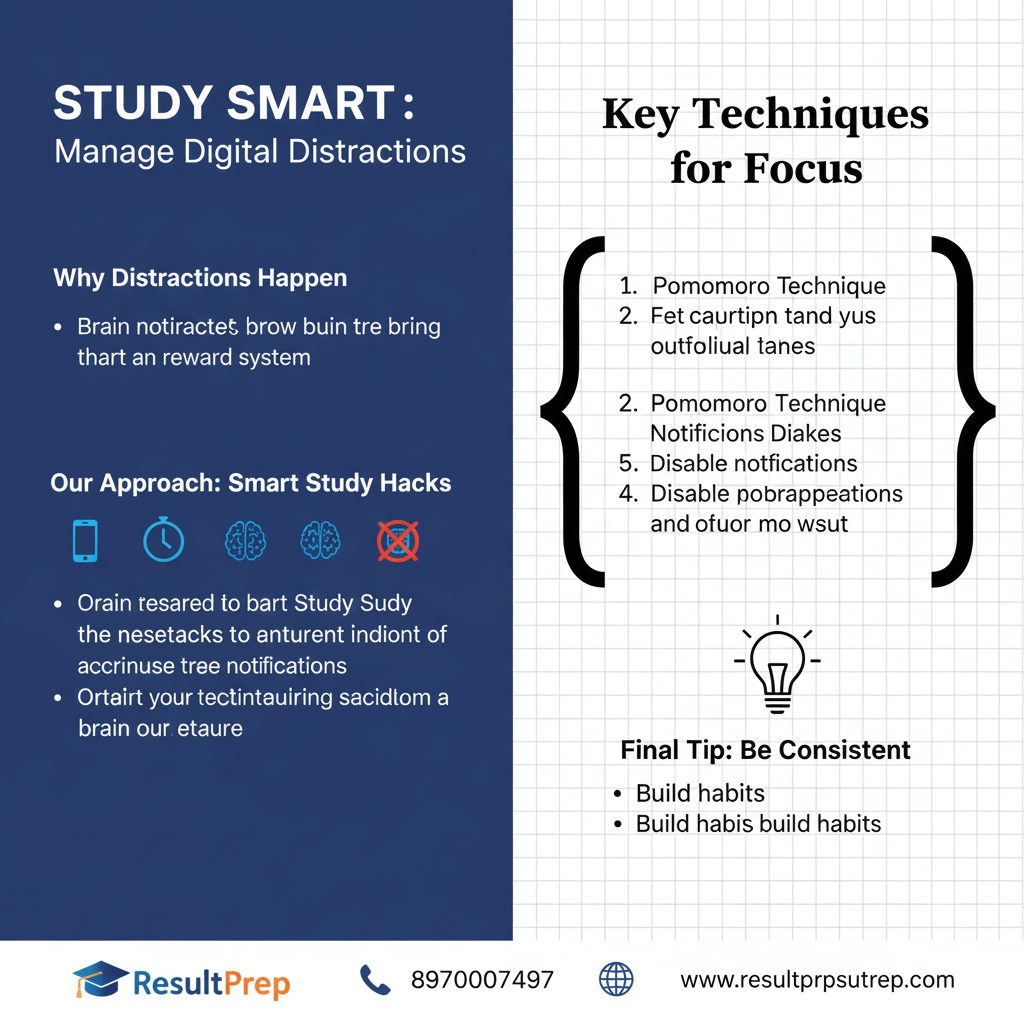
Digital distractions are powerful because they target the brain’s reward system. Every notification, message, or like triggers a small release of dopamine—your brain’s “pleasure chemical.” This makes you want to check your phone again and again, even while studying.
Common digital distractions include:
Social media apps (Instagram, Snapchat, Facebook, X)
Gaming apps
Incoming messages and calls
YouTube or OTT platforms
Random internet browsing
When students get interrupted repeatedly, their brain needs extra time to settle back into study mode. This reduces concentration and productivity.
How Digital Distractions Affect Learning
Digital distractions can lead to:
Reduced ability to focus
Lower memory retention
Increased stress due to unfinished tasks
Poor exam performance
Habitual multitasking, which actually slows you down
In fact, research suggests that even having your phone in the same room can reduce concentration because your brain stays alert for notifications.
Strategies to Manage Digital Distractions
Managing digital distractions doesn’t mean cutting off technology completely. Instead, you must learn to use it smartly. Here are the most effective strategies:
1. Use the Pomodoro Technique
One of the best ways to stay focused is the Pomodoro Technique. It works like this:
Study for 25 minutes
Take a 5-minute break
Repeat this cycle 4 times
Take a longer break of 15–20 minutes
Because you study in short bursts, your mind remains fresh and focused. During the study interval, keep your phone away or turn on a focus mode.
2. Turn Off Non-Essential Notifications
Most interruptions come from notifications. Turn off notifications for apps like Instagram, YouTube, and games. Keep only essential alerts like calls from parents or teachers. This dramatically reduces the urge to check your phone.
3. Use “Do Not Disturb” or Focus Modes
Modern smartphones offer focus tools designed to minimize interruptions. You can enable:
Do Not Disturb mode
Focus Mode
App timers
Study mode (available on some devices)
These settings temporarily limit phone usage and help students avoid temptation.
4. Keep Your Study Space Tech-Free
Create a physical environment that supports concentration. Remove unnecessary gadgets from your desk. Keep only what you need—your books, notes, and stationery. If you use your laptop for studying, close all extra tabs and avoid background apps.
A clean, organized space encourages a calm mind.
5. Use Website Blockers and Productivity Apps
If you study on a laptop, website-blocking apps can help limit access to distracting sites. Tools like:
Forest
StayFocusd
Freedom
Cold Turkey
These apps block social media, gaming pages, or any distracting websites during your study hours. This helps you maintain discipline even when motivation is low.
6. Practice the “Two-Device Rule”
Use one device for studying and another for personal use. For example, study on your laptop with your phone kept away in another room. This reduces sudden urges to check your social apps and keeps your learning uninterrupted.
7. Build a Realistic Study Routine
A well-planned schedule helps you manage your time better. Plan your day with fixed study slots, break timings, and revision periods. When you know exactly what to do and when, you’re less likely to get distracted.
Make sure your timetable includes small breaks to refresh your mind.
8. Avoid Multitasking
Multitasking may feel productive, but it divides your attention. Switching between studying and checking your phone lowers efficiency. Focus on one task at a time to complete your work quicker and with better quality.
9. Develop Mindfulness and Self-Control
Learning to manage distractions also requires mental discipline. Practicing mindfulness by taking deep breaths and reminding yourself of your goals improves focus. When your mind wanders, gently bring it back to the task at hand. Over time, your concentration becomes stronger.
10. Set Digital Boundaries
To maintain a healthy study-life balance, set specific rules for yourself:
No phone in the first hour after waking up
No social media during study hours
Fixed screen-free time before sleeping
These boundaries protect your focus and reduce digital fatigue.
Conclusion
Digital distractions are unavoidable, but they can be managed with the right strategies. Whether you are preparing for CUET, CLAT, CA Foundation, or school exams, staying focused helps you understand concepts faster and perform better in tests. Techniques like Pomodoro, using focus modes, blocking distracting apps, and maintaining a disciplined routine can transform your study habits. Remember, technology is a tool, not a trap. When used wisely, it can support your learning instead of interrupting it.
Prepare for the best results!
Achieve your goals with expert coaching and support from ResultPrep.
Contact us:
© 2025. All rights reserved.
Address:
GSS Complex, 2nd Floor,
16th Cross Rd, HMT Layout, Vidyaranyapura, Bengaluru, Karnataka- 560097