SLAT Preparation: An All-Inclusive Guide to Getting Ready for Your Law Entrance Exam
Targeting Symbiosis Law School (SLS Pune, Noida, Hyderabad)? Discover the all-inclusive SLAT preparation guide covering 60-minute speed tactics, section-wise strategies, and study plans.

The Symbiosis Law Admission Test (SLAT) is the gateway to some of the most sought-after private law schools in India: the prestigious Symbiosis Law School (SLS) campuses in Pune, Noida, Hyderabad, and Nagpur under Symbiosis International (Deemed University). SLS Pune, consistently ranked among the top 10 law schools nationally, offers world-class corporate placements, mooting culture, and global academic exchange programmes.
Cracking the SLAT requires a distinct approach compared to other law entrances like CLAT or AILET. While CLAT tests extended 450-word comprehension passages and AILET challenges with severe negative penalties, SLAT is a high-speed, balanced test evaluating quick logical reflexes, reading efficiency, legal discernment, and general awareness across a compact 60-minute duration.
The SLAT Sprint: 60 Questions in 60 Minutes (Zero Negative Marking!)
SLAT features 60 questions divided equally across 5 sections (12 questions each) to be solved in 60 minutes. Crucially, there is no negative marking! This unique structure rewards rapid question selection, sharp elimination instincts, and calculated 100% attempt strategies.
Understanding the 5-Section SLAT Exam Pattern
Every section carries equal weightage (12 marks each), making a balanced preparation strategy non-negotiable:
| Section | Questions / Marks | Key Topics Evaluated | Ideal Time Target |
|---|---|---|---|
| Logical Reasoning | 12 Qs (12 Marks) | Statements & assumptions, conclusions, cause & effect, syllogisms, analogies | 12 Minutes |
| Legal Reasoning | 12 Qs (12 Marks) | Principle-fact scenarios, constitutional principles, legal maxims, basic contracts & torts | 12 Minutes |
| Analytical Reasoning | 12 Qs (12 Marks) | Puzzles, linear & circular arrangements, blood relations, direction sense, series | 14 Minutes |
| Reading Comprehension | 12 Qs (12 Marks) | Short narrative and analytical passages, contextual vocabulary, main ideas, tone | 14 Minutes |
| General Knowledge | 12 Qs (12 Marks) | Current affairs (last 9 months), landmark court judgments, government policies, static GK | 8 Minutes |
Core Strategies for Each Section
1. Logical & Analytical Reasoning (24 Marks Total)
Together, Logical and Analytical Reasoning constitute 40% of the SLAT question paper. Distinguish clearly between the two branches:
- Logical (Critical) Reasoning: Practice argument structure, identifying unstated assumptions, spotting causal fallacies, and evaluating inferences.
- Analytical Puzzles: Master standard diagramming methods for complex seating arrangements, family blood relationship trees, and direction coordinates. Learn to identify quick wins versus convoluted time sinks.
2. Legal Reasoning (12 Marks)
SLAT legal questions follow the classic Principle → Fact → Conclusion format. Follow the legal principle strictly without importing moral biases or outside statutory legal knowledge. Master basic constitutional provisions (Fundamental Rights, DPSP), general principles of contract law (offer, acceptance, consideration), and essential tort liabilities (negligence, strict liability).
3. Reading Comprehension & English Usage (12 Marks)
Passages in SLAT are typically shorter (200–350 words) than CLAT, but require immediate comprehension. Read opinion editorials daily to build reading stamina. Focus on understanding the primary thesis, recognizing tone markers, and deducing unfamiliar vocabulary through contextual clues.
4. General Knowledge & Current Events (12 Marks)
Because you only need 8 minutes to clear the 12 GK questions, this section serves as your primary time-bank for analytical puzzles. Organize monthly notes across thematic categories: national events, international summits, judicial appointments, landmark Supreme Court judgments, and major sporting achievements.
The Learn-Practice-Analyze (LPA) Routine
To avoid aimless studying, execute this structured 3-tier loop every single day:
Learn (Concepts)
Understand the foundational mechanism or formula before touching question sets (e.g., syllogism rules or contractual breach remedies).
Practice (Timed Sets)
Solve 20–25 questions in 20 minutes under a ticking stopwatch to train under realistic cognitive pressure.
Analyze (Error Log)
Audit every missed question: was it due to misreading, slow puzzle decoding, or an unwarranted assumption? Record it in your Error Notebook.
A Balanced Daily Study Timetable
Structure your weekdays to cover all competencies systematically:
- Morning (45 mins): Newspaper editorial reading + 15 minutes of monthly Current Affairs revision.
- Afternoon (60 mins): Logical & Analytical Reasoning problem sets (puzzles, blood relations, assumptions).
- Evening (45 mins): Legal Reasoning scenarios + Reading Comprehension passage drills.
- Night (30 mins): Error Log review and consolidating flashcards for vocabulary and legal maxims.
The 3-Phase Long-Term Preparation Roadmap
- Phase I: Strong Foundations (Months 1–2): Master grammatical structures, fundamental reasoning patterns, legal definitions, and establish daily reading habits.
- Phase II: Intense Sectional Practice (Months 3–4): Solve topic-wise question banks under strict 12-minute sectional limits to build reflex speed.
- Phase III: Full Mocks & Personal Interview Prep (Final 45 Days): Attempt 2 full-length 60-minute SLAT computer-based mocks weekly. Additionally, prepare for the subsequent Personal Interaction (PI) and Writing Ability Test (WAT) rounds conducted by Symbiosis law schools.
Common SLAT Preparation Pitfalls to Avoid
- Studying Without a Clock: SLAT gives exactly 60 seconds per question. Practicing without a timer leads to severe exam-day time crunches.
- Leaving Questions Blank: Because there is zero negative marking, never leave an unattempted question on SLAT! Always eliminate unlikely choices and mark an educated guess.
- Resource Hoarding: Gathering 10 different book series creates confusion. Master one reliable standard law entrance curriculum thoroughly.
- Neglecting Weak Areas: Spending 80% of your time on favorite GK topics while avoiding tricky analytical puzzles caps your total score.
Join Symbiosis Law School With ResultPrep
Aiming for SLS Pune, SLS Noida, or SLS Hyderabad? ResultPrep provides comprehensive SLAT test series, high-speed sectional drills, simulated CBT mock environments, and personalized Personal Interaction (PI) / WAT mentorship from top law school alumni.
Book a Free SLAT Counselling SessionDiscussion (7)
Arjun Kapoor
This is a very insightful article. The strategies mentioned are incredibly practical.
Neha Reddy
I've been preparing for a few months now and these tips perfectly align with what my mentors have been saying.
Vikram Das
Do you have any offline batches starting soon? I need help with the advanced topics.
Kavya Rao
Bookmarked! I will be revisiting this guide before my mock tests next month.
Rahul Mehta
The point about consistent daily practice cannot be overstated. Great read.
Simran Nair
Thank you for breaking down such a complex topic into actionable steps.
Manish Patel
I shared this with my entire study group. We were making half the mistakes listed here.
Related Articles in SLAT Preparation

SLAT Preparation: Complete Guide to Prepare for SLAT 2027
Comprehensive guide for Symbiosis Law Admission Test (SLAT 2027). Detailed exam pattern, 60-question breakdown, section-wise strategy, daily study timetable, mock error analysis, and 12 FAQs.

What to Consider Before Enrolling in an IPMAT Coaching Center
A comprehensive 12-point checklist for aspirants and parents: Evaluate faculty pedigree, batch sizes, mock analytics, fee transparency, commute logistics, and WAT-PI interview coaching.
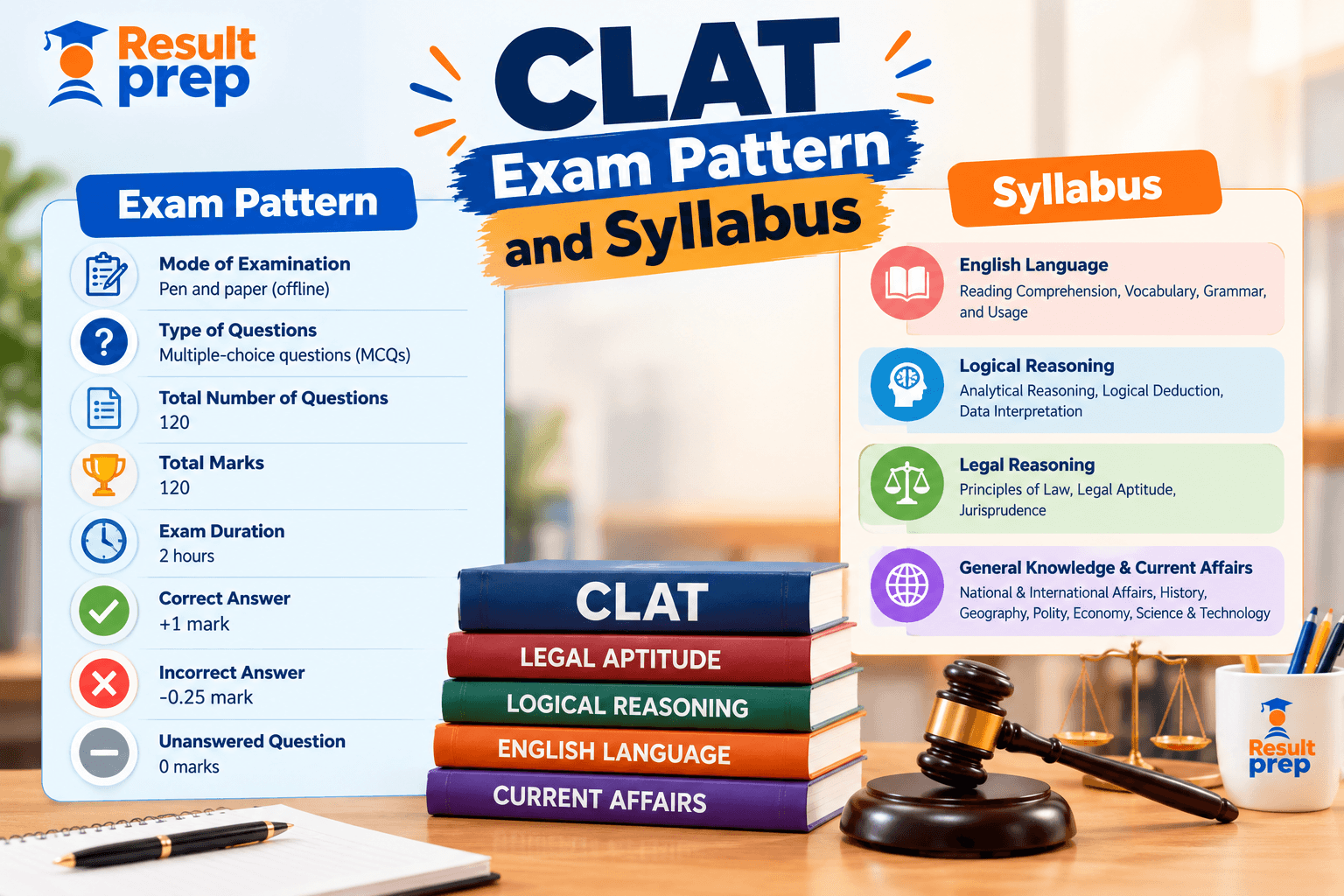
Everything Students Should Know About the CLAT Exam Pattern and Syllabus
The complete guide to the CLAT 2027 exam pattern and syllabus: 120-question passage format, 5 sectional syllabi, marking scheme, offline OMR logistics, and preparation roadmaps.